




Remember when backlighting meant bulky light panels, uneven LED strips, or complicated edge-lighting systems?
That era is over.
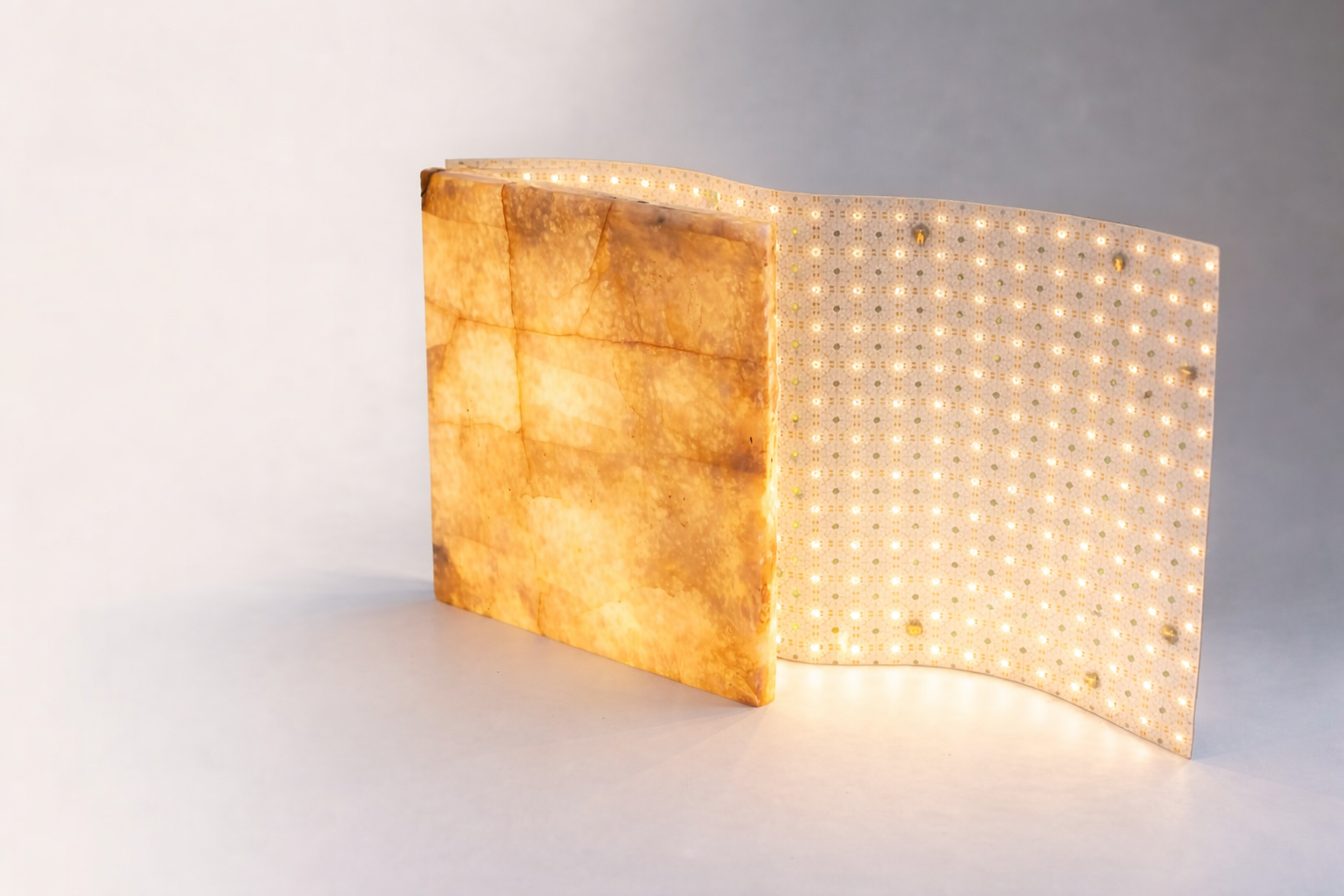
Today’s flexible LED light sheets are ultra-thin, cuttable, high-density lighting panels that create smooth, hotspot-free illumination behind stone, acrylic, glass, fabric, and signage.
From luxury onyx countertops to retail light boxes and RGB bar installations, LED sheets are replacing traditional backlighting systems.
In this guide, you’ll learn:
- What makes a high-quality LED sheet
- How to choose between tunable white and RGB
- How to avoid hotspots
- How to size your power supply correctly
- Installation best practices used by professionals
What Are LED Light Sheets?
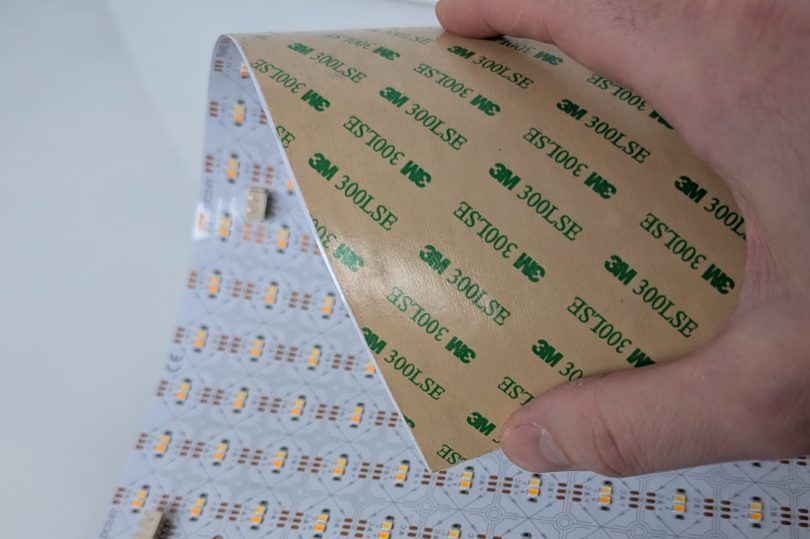
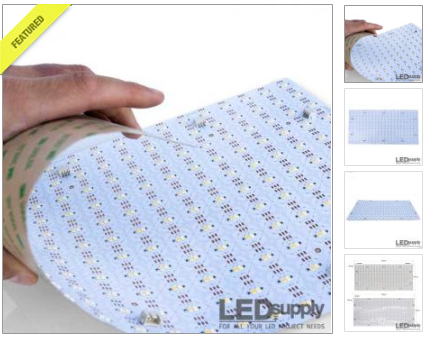
A flexible LED sheet is a thin, modular panel of surface-mounted LEDs arranged in a dense grid pattern on a flexible PCB.
Unlike LED strips that create visible dots or uneven light patterns, LED sheets distribute LEDs evenly across the surface for smooth, consistent backlighting.
Key Construction Features
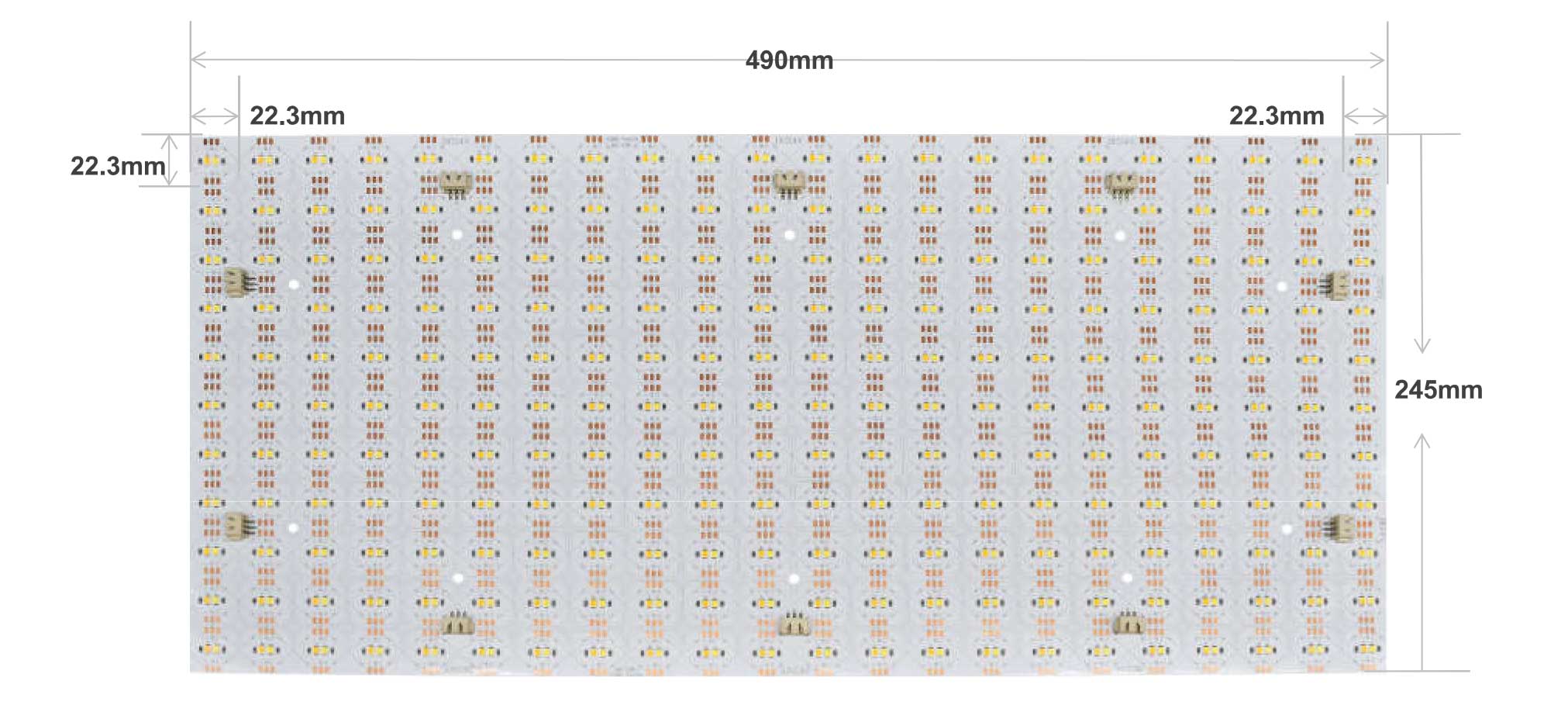
- High LED density (484 LEDs – Tunable White version)
- Flexible double-layer PCB
- Precision printed cutting grid
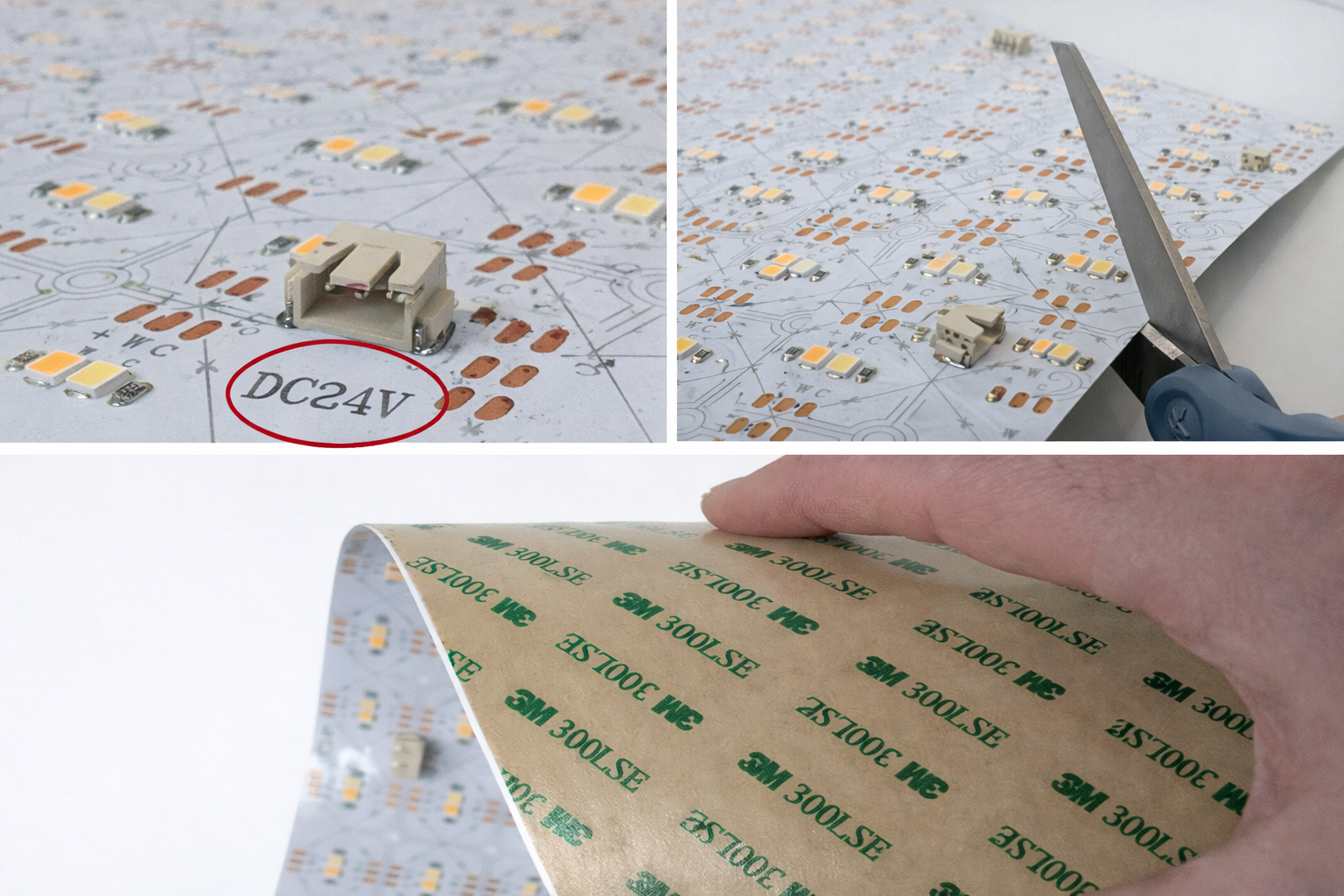
- 24V DC operation
- 120° wide beam angle
- Genuine 3M adhesive backing
Sheet Dimensions: 490mm × 245mm (20” × 10”)
Built with premium Lumileds SMD chips, these sheets deliver up to 95 lm/W efficacy and a rated lifespan of 36,000 hours.
Where LED Sheets Shine (Literally)
1. Backlit Natural Stone (Onyx, Quartz, Marble)
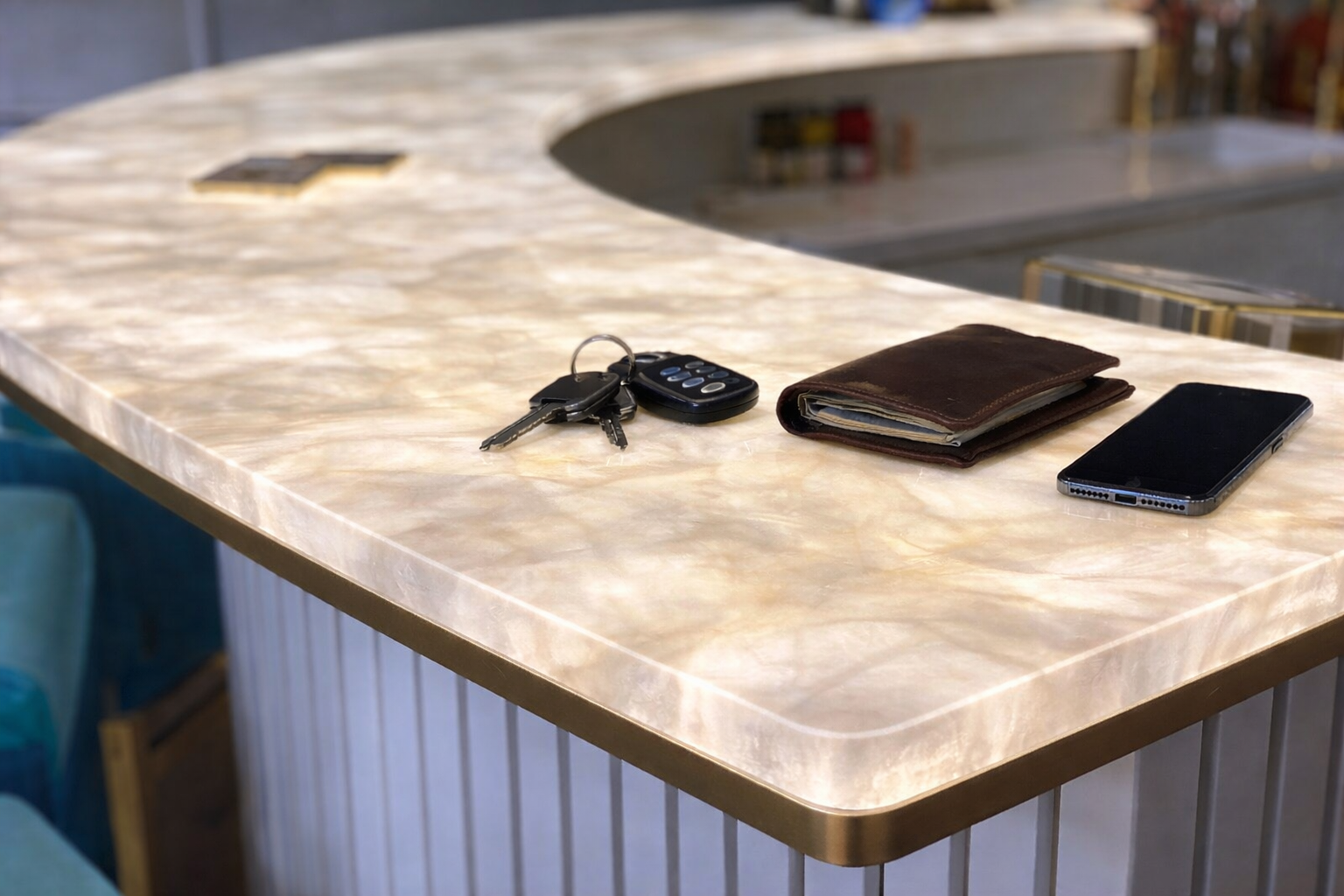
LED sheets are ideal behind translucent stone surfaces.
- Uniform light reveals natural veining
- Wide 120° beam angle spreads illumination evenly
- Tunable white allows precise warmth control
This is one of the highest-value applications in architectural lighting.
2. Retail Displays & Light Boxes

- Channel letters
- Storefront signage
- Product displays
- Commercial light boxes
Sheets eliminate the need for custom strip layouts and reduce hotspot risk.
3. RGB Bars & Feature Installations
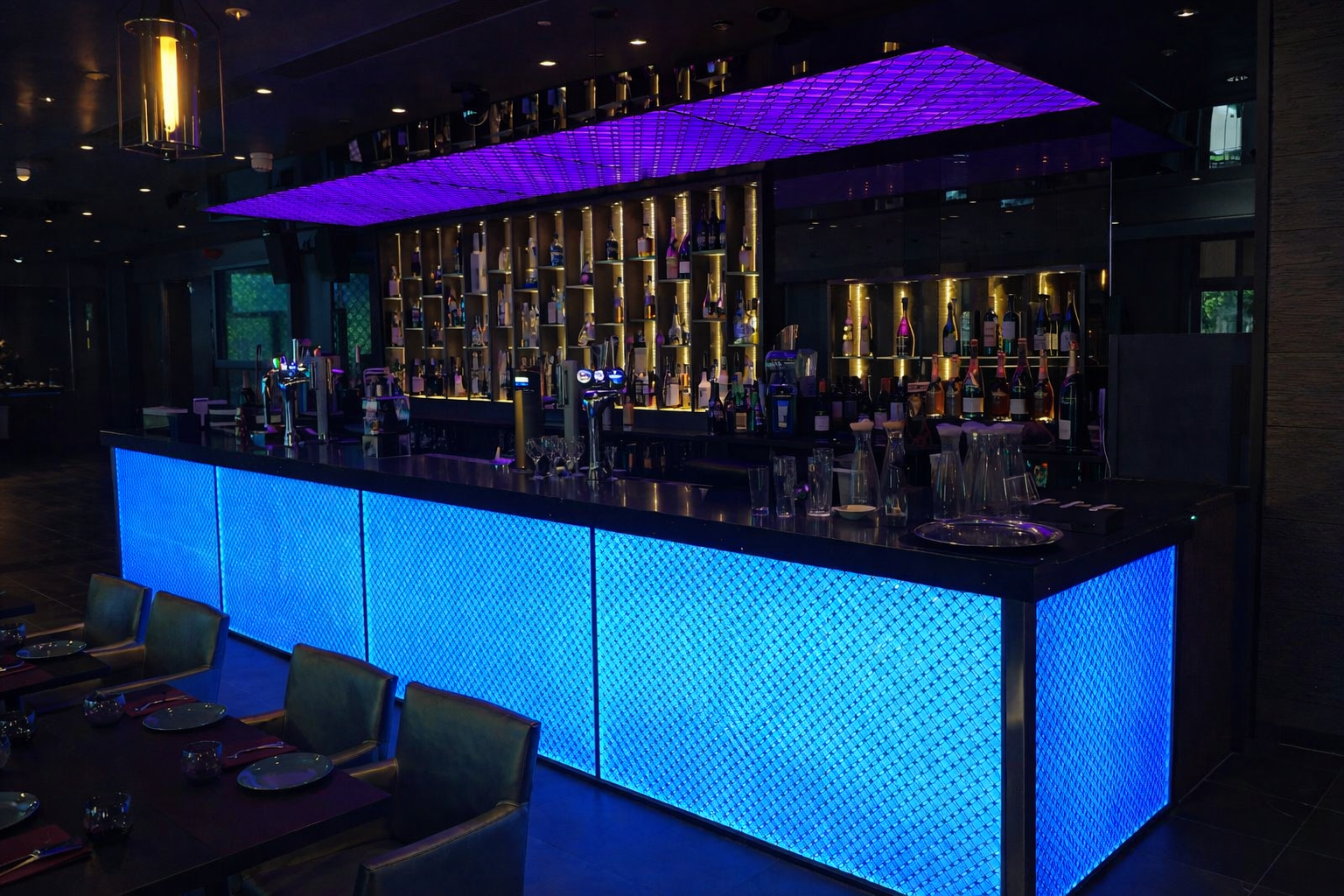
The RGB version (128 LEDs per sheet) allows full-spectrum color scenes ideal for:
- Bars and restaurants
- Nightclubs
- Entertainment venues
- Decorative architectural accents
4. Cabinetry & Architectural Accents
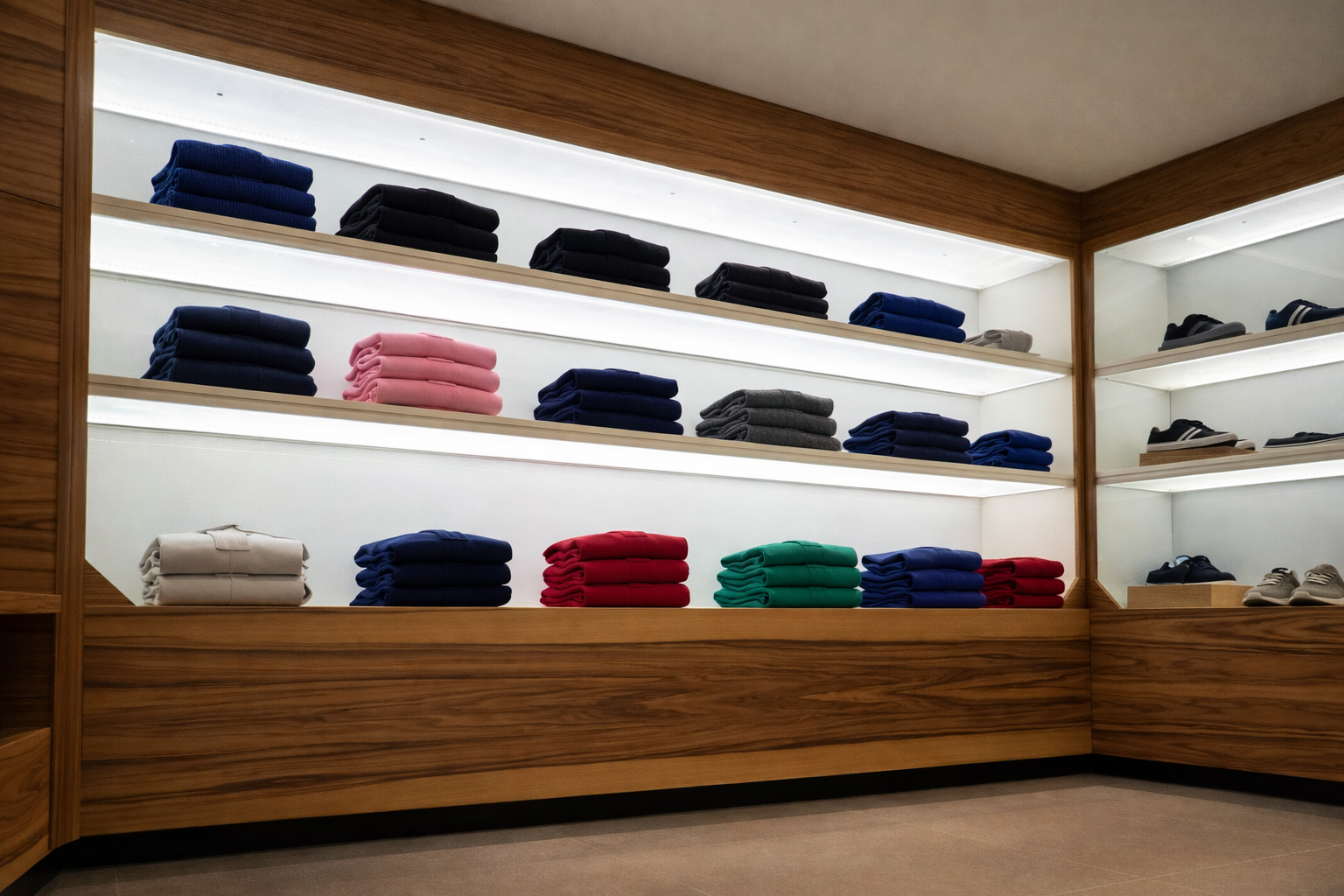
Flexible sheets can bend around corners and be cut to exact cabinet dimensions, making them perfect for shelving, cabinetry, luxury kitchens, and millwork.
Key Features That Make or Break a Flexible LED Sheet
1. Voltage: Why 24V Is Better
24V systems provide:
- Longer run capability
- Reduced voltage drop
- Improved efficiency
- Smoother dimming performance
All LEDSupply sheets operate on 24V DC for professional-grade installs.
2. LED Density & Uniformity
- 484 LEDs (Tunable White)
- 128 LEDs (RGB)
- Up to 95 lm/W efficacy
Higher density means fewer hotspots and more even blending behind diffusers.
3. Precision Cut Intervals
- 22.3mm cut interval (Tunable White)
- 30.6mm cut interval (RGB)
Always cut along the printed grid lines to maintain electrical continuity.
4. Adhesive & Mounting Options
- Genuine 3M adhesive backing
- Reinforced screw mounting points
- Included silicone anti-collision pads
This ensures secure installation even in demanding commercial environments.
5. Color Options
Tunable White (2700K–6500K)
- Adjustable white tones
- Dual-channel control
- CRI Ra > 80
RGB Version
- Full-spectrum color control
- Compatible with RGB controllers
- Ideal for dynamic lighting scenes
Step-by-Step Installation Guide
Step 1: Dry Fit the Layout
Test the sheet placement before removing adhesive backing.
Step 2: Trim to Shape
Use sharp scissors and cut only along marked grid lines.
Step 3: Mount the Sheets
- Peel-and-stick 3M backing
- Use screw holes if mechanical fastening is required
- Add silicone bumper pads for stone protection
Step 4: Wire the System
LED sheets require a 24V DC driver. Match voltage and total wattage before powering on.
Use quality connectors or soldered joints for linking sheets.
Step 5: Add Diffusion Layer
Proper spacing between sheet and diffuser is essential for hotspot-free lighting.
Professional recommendation: Maintain at least 25–30mm cavity depth for optimal blending.
Choosing the Right Power Supply (LED Sheet Driver Guide)
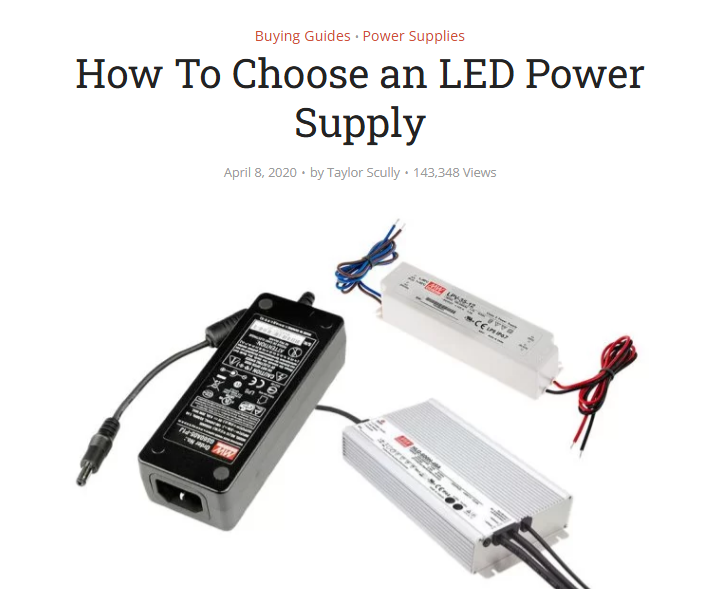
To properly size your power supply, use this formula:
Power Supply Wattage = (Sheet Wattage × Number of Sheets) ÷ 0.8
The 0.8 factor adds 20% safety headroom to prevent overloading.
Example
4 sheets at 36W each:
(36 × 4) ÷ 0.8 = 180W minimum driver required
Dimming Compatibility
- PWM dimmable
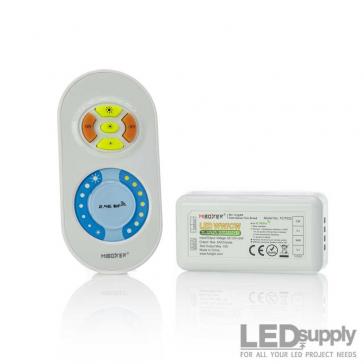
- Compatible with tunable white controllers
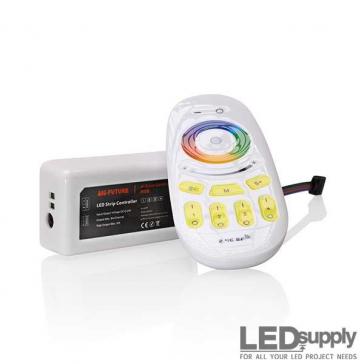
- RGB version requires compatible RGB controller
How to Achieve Hotspot-Free Backlighting
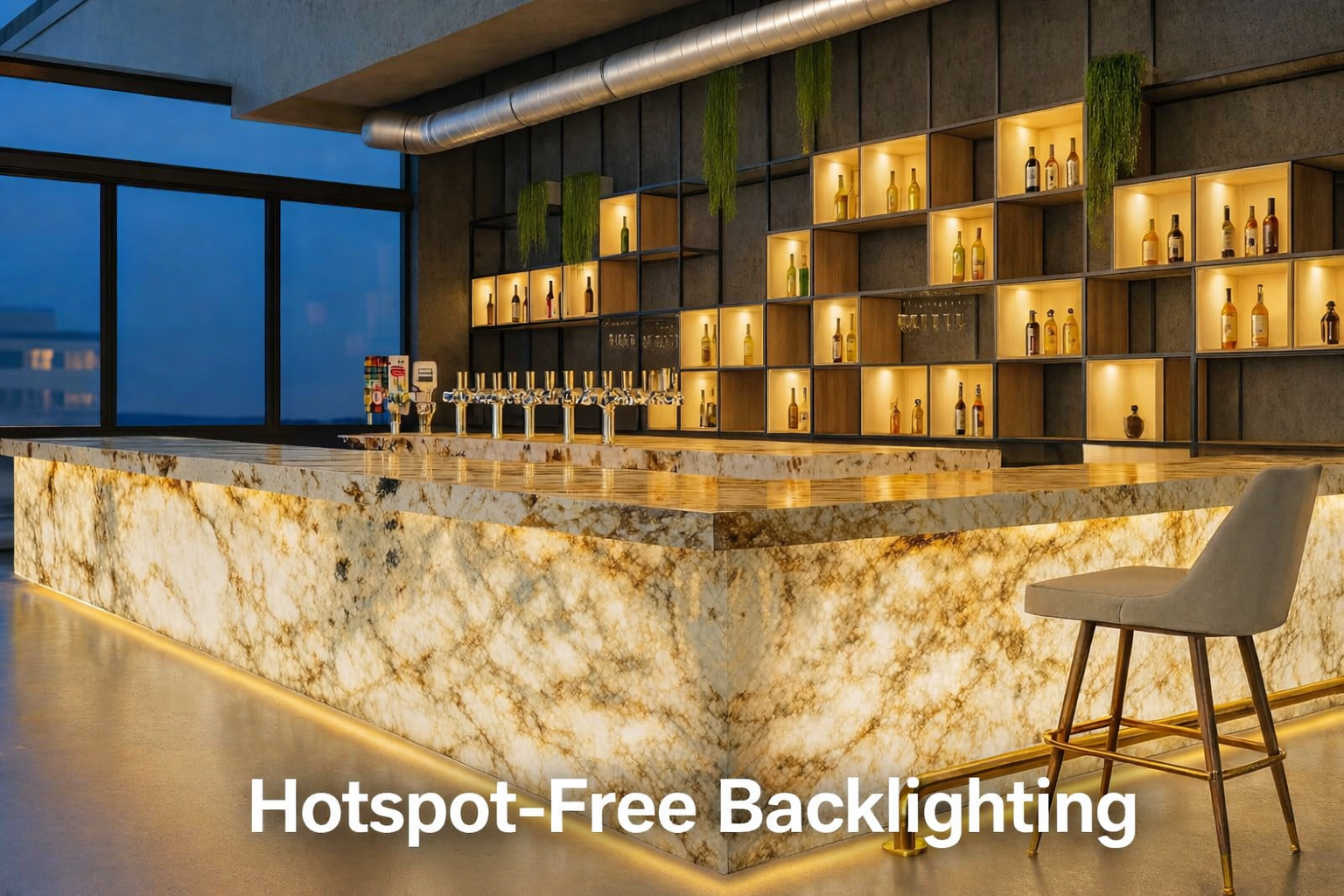
Hotspots occur when:
- LED density is too low
- Diffuser gap is too small
- Sheets are unevenly spaced
Pro Tips
- Maintain consistent cavity depth
- Avoid overlapping cut sections
- Use high-transmission diffusion film
- Evenly space sheets when joining
The double-layer PCB improves thermal management and helps stabilize long-term output.
Real Project Example: What One Sheet Can Do
A single 490mm × 245mm sheet can:
- Backlight a 2ft light box
- Illuminate a quartz countertop section
- Power a display panel
- Create an RGB feature wall accent
Multiple sheets can be linked together to illuminate large commercial surfaces or architectural feature walls.
Why LEDSupply LED Sheets Stand Apart
- Premium Lumileds LEDs
- Up to 95 lm/W efficacy
- 36,000-hour rated lifespan
- Double-layer flexible PCB
- Genuine 3M adhesive backing
- 24V professional-grade system
- 3-Year warranty
- Fast U.S. shipping
This is not a generic LED panel. It’s built for designers, sign shops, fabricators, and lighting professionals who demand consistent performance.
Ready to Start Your Backlighting Project?
Explore our complete lineup:
- Flexible LED Light Sheets (24V)
- Tunable White Controllers
- RGB Controllers
- 24V Power Supplies
- LED Wiring & Connectors
If you need help sizing your system, our team is ready to assist.