









Define the Site Conditions
Identify rain, spray, condensation, direct water contact, temporary immersion, cleaning methods, UV exposure, temperature and mounting orientation. The most demanding realistic condition should drive construction.



 ,
Operating Voltage ,
IP Rating ,
Color Temperature (CCT) ,
Color (nm) ,
Light Output (lm/ft) ,
LED Density (LEDs/M) ,
CRI ,
Power Consumption (W/ft) ,
Maximum Run Length (ft) ,
Cutting Interval (Inches) ,
Strip Width ,
Narrow your choices
,
Operating Voltage ,
IP Rating ,
Color Temperature (CCT) ,
Color (nm) ,
Light Output (lm/ft) ,
LED Density (LEDs/M) ,
CRI ,
Power Consumption (W/ft) ,
Maximum Run Length (ft) ,
Cutting Interval (Inches) ,
Strip Width ,
Narrow your choices
Compare white, RGB, RGBW, addressable, long-run and wall-washer products by protection rating, voltage, output, CCT, density, power, cut interval and control requirements.


Start with the actual exposure—not the word “outdoor.” Then select the protection level, light type, electrical platform, performance and installation components as one coordinated system.
Identify rain, spray, condensation, direct water contact, temporary immersion, cleaning methods, UV exposure, temperature and mounting orientation. The most demanding realistic condition should drive construction.
IP65, IP67 and IP68 describe different tested levels of ingress protection. They are not interchangeable, and the rating of the tape does not automatically extend to field cuts, connectors, power supplies or controls.
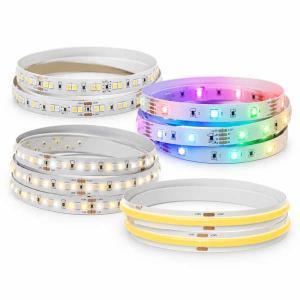
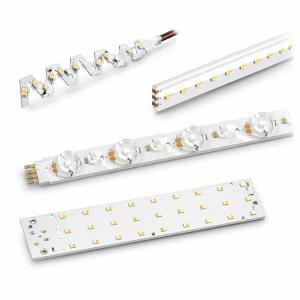
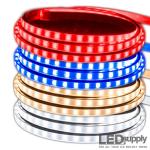
Choose fixed white for functional illumination, RGB or single color for accents, RGBW for color plus dedicated white, addressable RGB for pixel effects, or an optic wall washer for controlled architectural grazing.
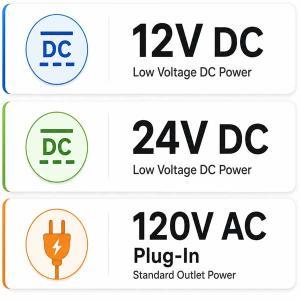
Use 12V or 24V for low-voltage flexibility and compatible dimming or color control. Consider 120V plug-in products for long continuous runs, while accounting for their larger cut intervals and product-specific connection requirements.
Compare lumens per foot, watts per foot and efficacy for white light. Specify CCT and CRI where appearance matters; for wall washing, also evaluate beam angle, setback, aiming and surface texture.
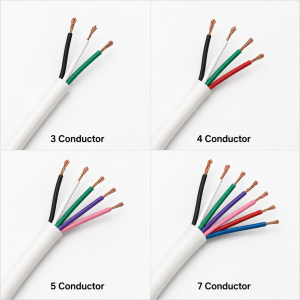
Confirm maximum run, cutting interval, strip width, conductor count and controller architecture before laying out channels, feeds and sealed terminations. Product cut intervals range from inches to approximately 19.7 inches.
IP rating addresses ingress protection under defined test conditions. Temperature capability, UV exposure, chemistry, mechanical protection and the integrity of every connection must also be considered.
The current assortment covers everyday white illumination, static and dynamic color, focused facade lighting, long runs and specialized high-moisture or high-temperature conditions.
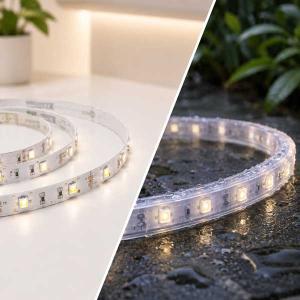
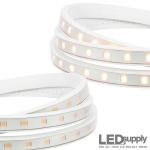
For patio details, railings, protected architectural edges and other outdoor white-light applications.
For landscape accents, hospitality environments, signs and decorative exterior details.
For grazing facades, stone, columns and contours where controlled distribution matters more than diffuse tape-light output.
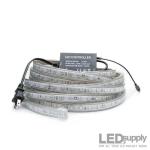
For longer linear applications where minimizing remote power feeds is a priority and the larger cut interval fits the layout.
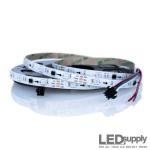
For programmed exterior effects where individual pixels or groups must display different colors along the same run.
For sauna and other demanding environments where ordinary outdoor tape is not designed for the combined heat and moisture.
Choose by installation objective rather than protection rating alone. Output, run length, optical control, serviceability and total system design separate these product families.
Standard-density 12V white, RGB and single-color tape for dependable accent applications and cost-sensitive projects.
Compare the series →High-density 12V products for brighter white or color output and more demanding commercial installations.
Compare the series →Optic wall washers for deliberate beam control, facade grazing and high-impact architectural illumination.
View wall washers →Plug-in strip and rope-light products for long linear layouts where fewer feed points outweigh less frequent cut intervals.
Plan a 120V run →Reliability depends on more than the tape. Plan electrical capacity, environmental protection, connections and mounting together before ordering.
Specify IP rating, voltage, light type, output, power, dimensions, cut interval and maximum run for each illuminated section.
Match voltage and channel architecture exactly. Size supplies and controls for connected load, headroom, ambient temperature and suitable environmental protection.
Plan factory leads or field connections, compatible conductor counts, cable glands, junctions, end seals and serviceable water-resistant enclosures.
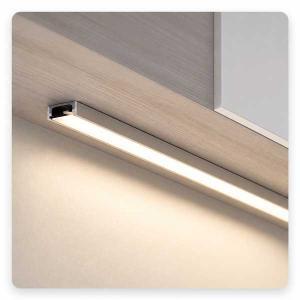
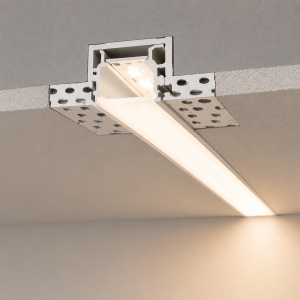
Use compatible channels, tracks or clips for mechanical support, straight alignment and a finished appearance; do not rely on adhesive alone in demanding exposure.
Use these LEDSupply guides to understand protected construction and plan voltage, wiring, accessories and long runs.
The ratings represent different tested levels of protection. IP65 addresses dust and water jets, while IP67 includes temporary immersion under defined test conditions. IP68 immersion conditions are established for the specific product. Always use the manufacturer’s limits and the actual installation exposure.
IP65 is appropriate for specified wet or outdoor exposure but is not an immersion rating. Do not treat “waterproof” as unlimited protection; mounting orientation, cut ends, connections, temperature, chemicals and aging all affect the installed result.
Yes, only at the product’s marked cut points. Cutting opens the protected construction, so the new end must be sealed with the specified materials and method before exposure. Confirm that field modification is allowed for the selected product.
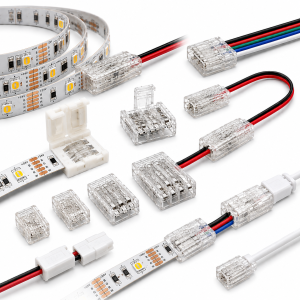
Use compatible protected connectors or properly executed sealed splices, strain relief and suitable junction enclosures. Match strip width, conductor count and pin order, and follow the product instructions for resealing every entry and end.
The supply and controller must be protected for their actual location. Use products with appropriate environmental ratings or install them in a suitable enclosure and location with ventilation, access, drainage and electrical protection as required.
Choose 12V or 24V for low-voltage layouts, shorter cut intervals and compatible dimming or color control. Consider 120V for long continuous runs where its larger cut interval, connection system and installation requirements suit the project. Never mix component voltages.
Stay within the published maximum run, calculate load and wire resistance, use appropriately sized conductors and add parallel feeds where necessary. Place supplies strategically and protect every feed and junction for the environment.
Channel can improve alignment, heat transfer, mechanical protection and appearance, but ordinary channel does not create an IP rating. The tape, diffuser, end caps, mounting and connections must be evaluated as a complete assembly.
No. RGB uses three color channels, RGBW adds a dedicated white channel, and addressable strip uses data-driven pixel control. Match controller type, voltage, capacity, wiring and signal requirements to the exact product.
Only products specifically documented for those environments should be used. Continuous immersion and high-temperature moisture are separate design conditions; use the dedicated submersible or high-temperature categories and follow the published limits.




Orders received before 3PM EST will be safely packaged and quickly shipped the same business day. If your order is NOT shipped the same business day, LEDSupply will offer a 5% discount off your next order.
All orders SHIP FROM:
296 Beanville Road
Randolph, Vermont 05060
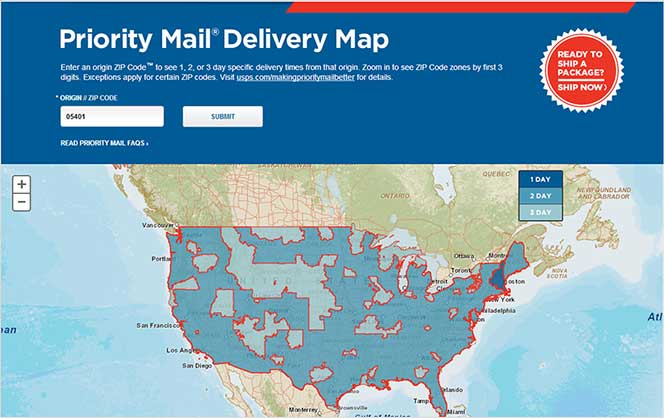
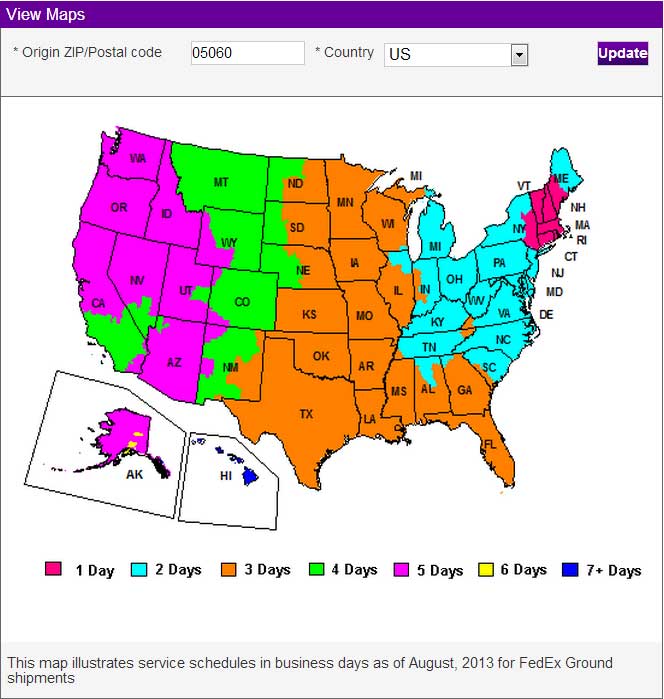
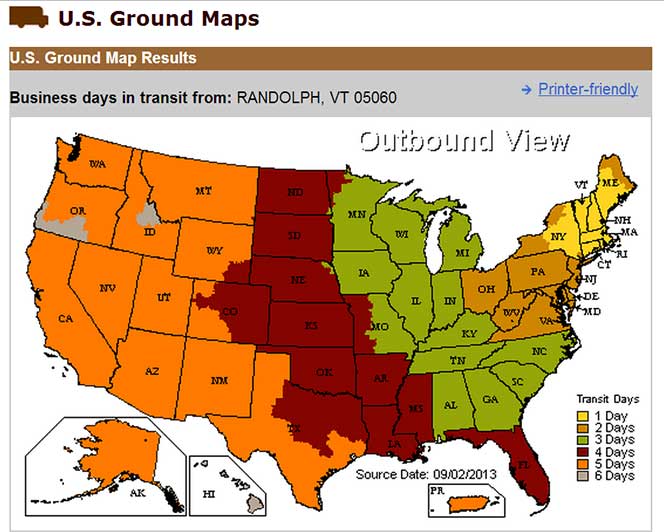
See respective ZONE maps below for SPECIFIC delivery time to your location:
Any order that does not qualify for free shipping, will by default include a discount of equal value to the free shipping offer.
The shipping offered is meant to provide the widest variety of shipping options at the lowest price: