







Standard vs. Addressable RGB
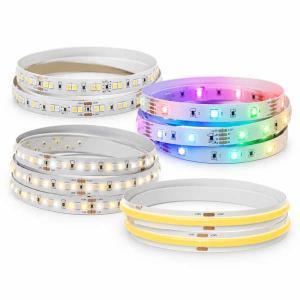
Standard RGB changes the entire connected run together. Addressable RGB divides the strip into data-controlled pixel groups that can display different colors simultaneously for chases, gradients and programmed effects.



 ,
Operating Voltage ,
IP Rating ,
Color (nm) ,
LED Density (LEDs/M) ,
Power Consumption (W/ft) ,
Maximum Run Length (ft) ,
Cutting Interval (Inches) ,
Strip Width ,
Narrow your choices
,
Operating Voltage ,
IP Rating ,
Color (nm) ,
LED Density (LEDs/M) ,
Power Consumption (W/ft) ,
Maximum Run Length (ft) ,
Cutting Interval (Inches) ,
Strip Width ,
Narrow your choices
Specify synchronized color, addressable effects or long-run plug-in lighting from one technical range. Compare control type, voltage, density, power, IP rating, form factor, run length and cut interval—then match every component to the selected strip.
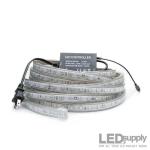
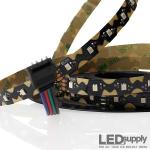
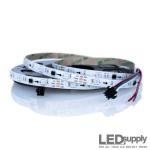
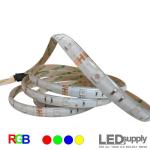
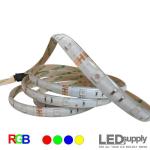
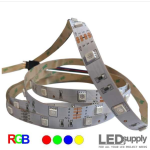
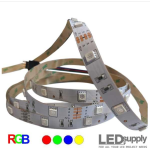
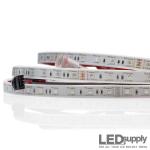
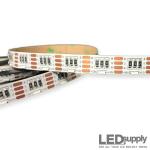
RGB is not one universal platform. Define the required effect, installation environment and control method first, then engineer the strip, controller, power and wiring as one compatible system.
Standard RGB changes the entire connected run together. Addressable RGB divides the strip into data-controlled pixel groups that can display different colors simultaneously for chases, gradients and programmed effects.
Match voltage across every powered component. The 12V and 24V products require compatible low-voltage power and control; the 120V plug-in product includes its own receiver, remote and power cord for runs up to 150 feet.
Current products span nominal 3–5W/ft and include standard-, high- and specialty-density layouts. Higher density generally improves output and visual uniformity, but system load and viewing geometry must be checked together.
Use IP20 in dry interiors, IP65 for the applicable damp or outdoor exposure, and the purpose-built Element Series IP68 product for sauna heat and moisture. IP rating alone does not establish temperature suitability.
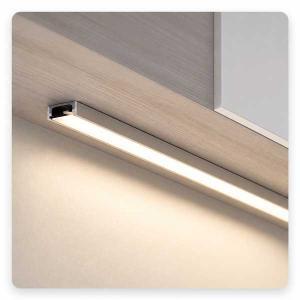
Standard tape bends through one plane. Select the 90° side-bending PCB for curves and corners, or side-emitting construction when light must project parallel to the mounting surface.
Confirm finished width, connector compatibility, allowable cut points and maximum continuous run before laying out channels, field connections and power-feed locations. These values vary substantially across the category.
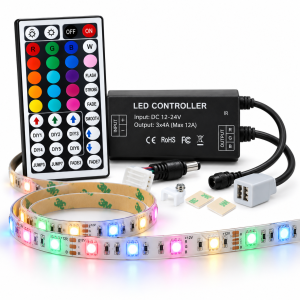
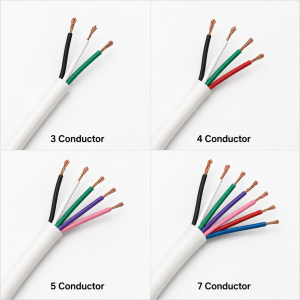
A compatible controller independently varies red, green and blue to mix colors. Standard low-voltage RGB uses four conductors—one common positive plus three channel returns—and the connected strip changes together along the run.
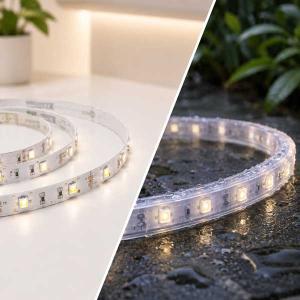
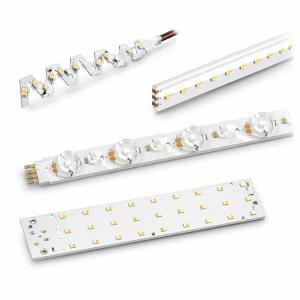
The range covers conventional indoor and waterproof tape plus specialized construction for pixels, tight geometry, long AC runs and sauna environments.
A practical 30 LEDs/m platform for accent, backlighting, shelving and decorative installations.
Twice the LED density of the Contractor Series for stronger output and a more uniform line of color.
Solve layouts where standard face-emitting tape cannot follow the required path or direct light correctly.
For gradients, chases, music-reactive scenes and other effects in which different pixel groups display different colors at the same time.
For large coves, outlines and commercial accents where direct plug-in power and long continuous runs simplify the architecture.
For sauna, spa and wellness-room installations requiring color-changing light plus purpose-built thermal and environmental protection.
These strip types solve different lighting problems. Select the simplest architecture that produces the required light, white-light quality and effects.
Choose RGB when the connected run can change color together and a dedicated white-light channel is not required.
Shop this category →Choose addressable RGB for gradients, chases and scenes with different colors displayed along the same run.
View addressable RGB →Choose RGBW when the project needs full-color effects plus a separate fixed-CCT white channel.
Shop RGBW strips →Choose tunable white when adjustable Kelvin value matters but saturated RGB colors are unnecessary.
Shop tunable-white strips →The strip is only one component. Confirm control protocol, voltage, channel load, wiring topology, dimensions and environmental requirements across the entire system before ordering.
Use the power architecture specified for the strip. Size low-voltage supplies for the published load plus appropriate headroom; use the included power components for the 120V product.
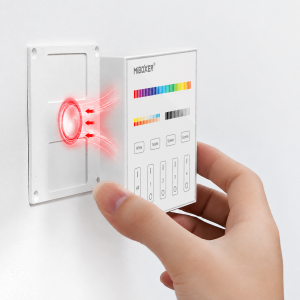
Use three-channel PWM control for standard RGB, a compatible IC pixel controller for addressable strip, or the supplied receiver and remote for the 120V system.
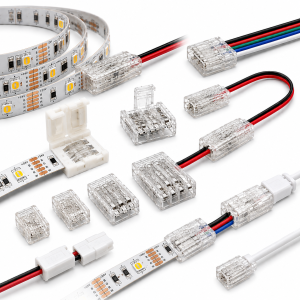
Match strip width, conductor count, polarity, pin order, IP rating and wire gauge. Plan every field cut, jumper, branch and parallel power feed.
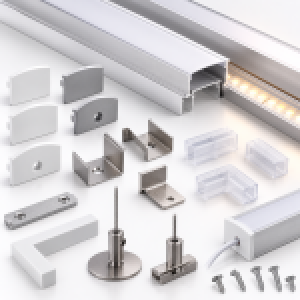
Choose channels, diffusers, clips or track for the required finish and support. Preserve or restore the specified environmental protection at cuts and connections.
Use these LEDSupply guides to plan control, power, mounting and the complete installation before ordering components.
RGB strip contains red, green and blue light channels. A compatible controller varies the channels independently to produce saturated primary colors, blended colors, brightness changes and supported dynamic effects.
Combining red, green and blue can create an approximate white appearance, but standard RGB does not contain a dedicated white LED channel and should not be treated as specified general illumination. Choose fixed-white or tunable-white strip when white-light quality is the primary requirement, or RGBW when the project needs both color effects and a dedicated white channel.
Standard RGB changes the entire connected run together through three PWM color channels. Addressable strip includes control ICs and divides the strip into pixel groups, allowing different sections to show different colors simultaneously. The controller and wiring are not interchangeable.
Yes. Standard low-voltage RGB requires a compatible three-channel controller; addressable strip requires its specified pixel controller. The 120V plug-in product includes an in-line RGB receiver and IR remote.
Choose the platform that fits the product form factor, cutting needs and run architecture. The primary straight RGB tapes are 12V, the bendable and sauna-rated products are 24V, and the 120V plug-in strip supports continuous runs up to 150 feet. Match every powered component to the selected voltage.
RGBW adds a separate white LED channel to red, green and blue. Choose RGB for color-focused installations; choose RGBW when the same strip also needs a purpose-built fixed-CCT white channel for everyday illumination.
Use an IP65 product only where its published exposure rating suits the installation. For sauna heat and moisture, use the Element Series RGB strip specifically rated from -30°C to 90°C and IP68. IP rating alone does not establish high-temperature suitability.
Yes, but only at the marked cut points, which range from approximately 0.625 inch to 39.4 inches across this category. Stay within the product's maximum run and use the correct wiring, connectors and power-feed topology. Cutting a sealed strip breaks the factory seal and requires proper resealing wherever environmental protection must be maintained.
Use the product's published power-by-length data where available, add the loads of all connected runs and include the specified capacity headroom. The controller must also be rated for the system voltage and total current. Check wire gauge and voltage drop for long or multi-run systems.




Orders received before 3PM EST will be safely packaged and quickly shipped the same business day. If your order is NOT shipped the same business day, LEDSupply will offer a 5% discount off your next order.
All orders SHIP FROM:
296 Beanville Road
Randolph, Vermont 05060
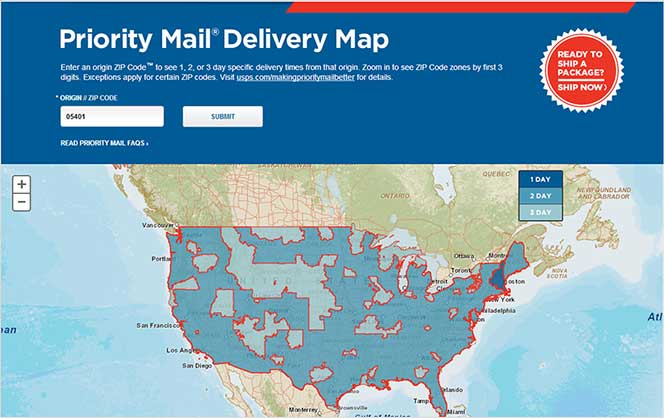
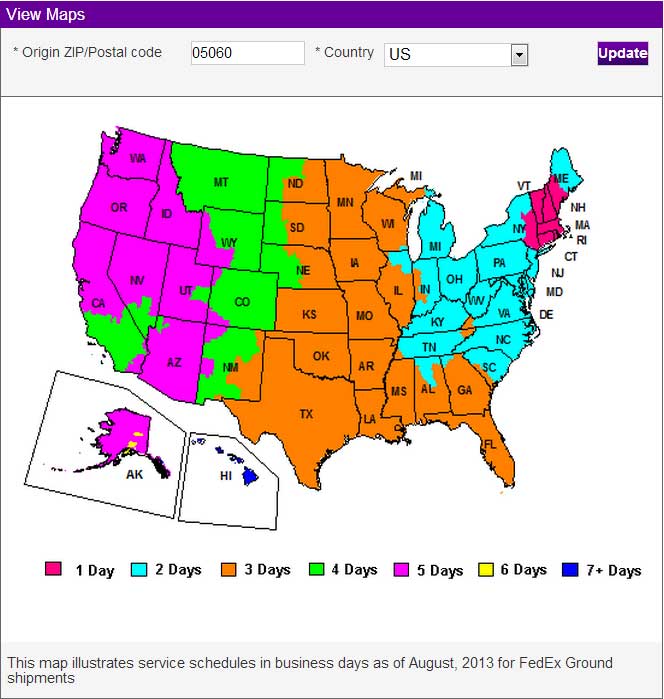
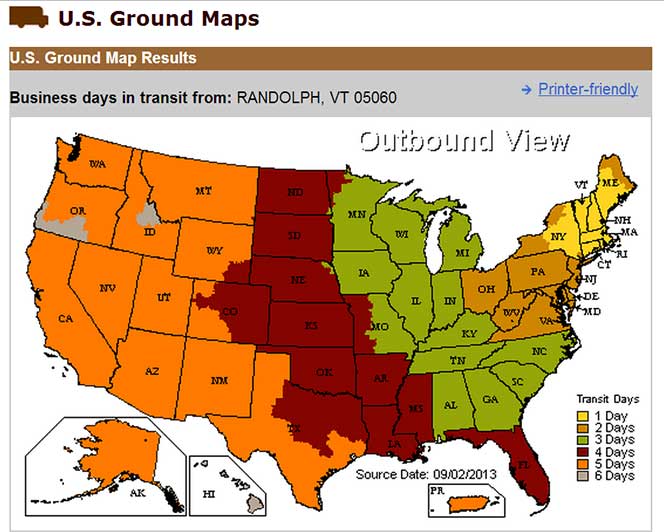
See respective ZONE maps below for SPECIFIC delivery time to your location:
Any order that does not qualify for free shipping, will by default include a discount of equal value to the free shipping offer.
The shipping offered is meant to provide the widest variety of shipping options at the lowest price: