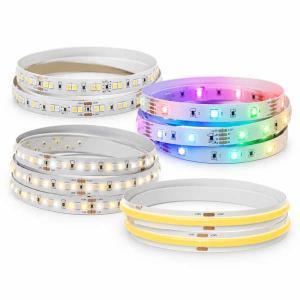









RGB + Dedicated White
RGB channels create saturated colors, blended colors and supported effects. The separate white channel provides purpose-built white illumination instead of relying only on an RGB mixture.



 ,
Operating Voltage ,
IP Rating ,
Color (nm) ,
LED Density (LEDs/M) ,
Power Consumption (W/ft) ,
Maximum Run Length (ft) ,
Cutting Interval (Inches) ,
Strip Width ,
Narrow your choices
,
Operating Voltage ,
IP Rating ,
Color (nm) ,
LED Density (LEDs/M) ,
Power Consumption (W/ft) ,
Maximum Run Length (ft) ,
Cutting Interval (Inches) ,
Strip Width ,
Narrow your choices
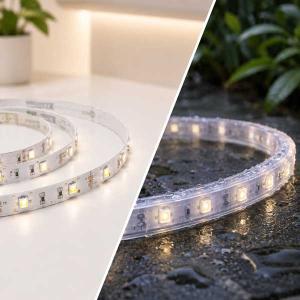
Specify full-color effects and a dedicated white channel from one system. Compare voltage, white CCT, output, power, density, IP rating, run length and cut interval—then match the strip to compatible four-channel control and five-conductor wiring.
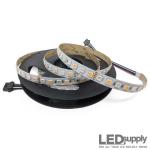
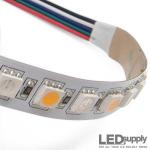
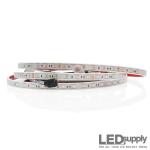

RGBW combines red, green and blue color channels with one dedicated white channel. Define the required white light, environment and control behavior first, then engineer the strip, power and wiring as one system.
RGB channels create saturated colors, blended colors and supported effects. The separate white channel provides purpose-built white illumination instead of relying only on an RGB mixture.
Specify the dedicated white channel by Kelvin value and published light output. Review CRI, R9 and TM-30 only when documented; do not assume color-rendering performance from the RGBW label alone.
Match the strip, controller and power supply voltage exactly. Choose 12V where that platform or shorter cut interval fits the project; 24V is generally preferred for larger professional systems and longer wire runs.
Current products use 5–7W/ft nominal ratings. Size both the constant-voltage power supply and four-channel RGBW controller for the connected load, with appropriate capacity headroom.
Use IP20 in dry interiors, IP67 for applicable indoor/outdoor exposure, and the purpose-built high-temperature IP68 strip for sauna conditions. IP rating alone does not establish temperature suitability.
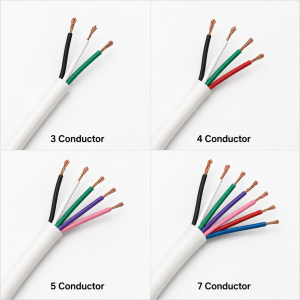
Confirm PCB or finished width, five-pin connector compatibility, allowable cut points and maximum continuous run before laying out channels, field connections and power-feed locations.
A compatible controller independently varies four output channels. Standard RGBW strip changes together along each connected run; it is not individually addressable.
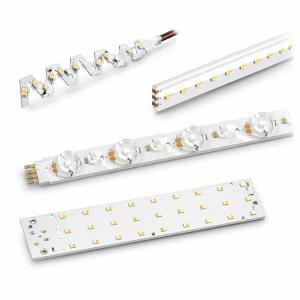
The current range covers indoor flexible tape, precise architectural wall washing and high-temperature sauna installations.
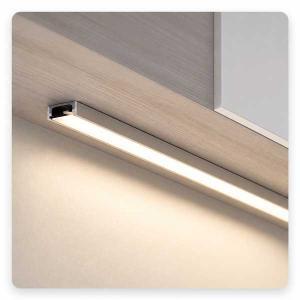
For dry interior coves, cabinets, displays and accent details that use a 12V system and benefit from more precise field sizing.
For dry indoor RGBW installations built around a 24V power and control architecture.
For controlled wall grazing, facade contours and high-impact architectural accents requiring a narrow beam.
For sauna, steam-room and demanding high-moisture installations that require purpose-built thermal and environmental protection.
These strip types solve different lighting problems. Select the simplest channel architecture that produces the required light and effects.
Choose RGB for synchronized color changing when a dedicated white-light channel is not required.
Shop RGB strips →Choose RGBW for synchronized color effects plus a separate fixed-CCT white channel in one strip.
Shop this category →Choose tunable white when adjustable Kelvin value matters but saturated RGB colors are unnecessary.
Shop tunable-white strips →Choose addressable strip when individual LEDs or segments must display different colors simultaneously.
Shop addressable strips →The strip is only one component. Confirm voltage, channel load, wiring topology, dimensions and environmental requirements across the entire system before ordering.
Use a 12V or 24V constant-voltage supply that matches the strip and is sized for the full connected load plus headroom.
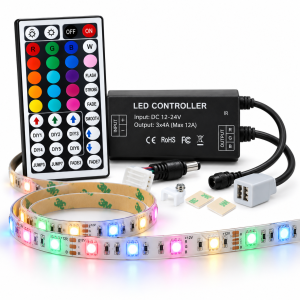
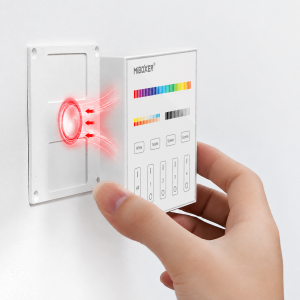
Use four-channel control rated for the system voltage, total load and desired interface, protocol, scenes and zones.
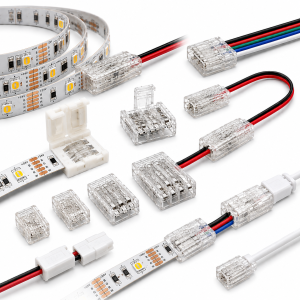
Match connector width and IP rating; verify pin order, common conductor, polarity, wire gauge and every planned branch or feed.
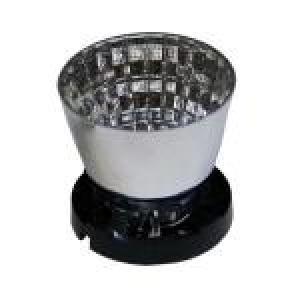
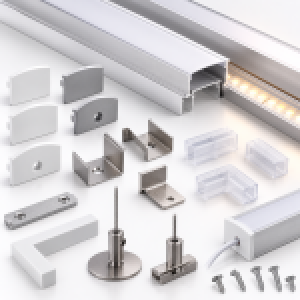
Choose channels, diffusers, clips or wall-washing optics for the required finish, beam control, protection and thermal conditions.
Use these LEDSupply guides to plan the color-control system, power, mounting and performance level before installation.
RGBW adds a separate white LED channel to red, green and blue. That provides a purpose-built white-light source for everyday illumination while retaining full-color effects. Standard RGB can mix an approximate white, but it does not include the dedicated white channel.
No. The dedicated white channel in these RGBW products has one fixed CCT—2700K or 3000K depending on the product. Tunable-white strip uses separate warm- and cool-white channels to adjust Kelvin value across a specified range.
Yes, when the controller supports independent channel adjustment. Adding the white channel to an RGB mixture can create softer tints and additional scene options. Do not treat those blends as calibrated CCT or color-rendering values unless test data states otherwise.
Yes. Use a four-channel RGBW controller rather than a standard three-channel RGB controller. Match its input/output voltage, per-channel and total capacity, polarity, connector pinout and desired control interface to the project.
Use the voltage required by the project platform and match every powered component to it. The current 12V indoor strip provides a shorter 2.81-inch cut interval; the 24V indoor strip fits professional 24V systems but uses a longer 4.92-inch cut interval. Both list a 16.4-foot maximum continuous run.
No. A standard RGBW controller changes the connected strip together. Choose addressable strip and its compatible data controller when individual LEDs or segments must display different colors at the same time.
Use the IP67 wall washer where its exposure rating and focused 20° beam suit the application. For sauna heat and high moisture, use the Element Series strip specifically rated from -30°C to 90°C and IP68. IP rating alone does not establish high-temperature suitability.
Yes, but only at the marked cut points, which vary significantly by product. Stay within the listed maximum run, use compatible five-conductor wiring or connectors, and add parallel feeds where required. Cutting a sealed strip breaks the factory seal at that end and requires proper resealing wherever environmental protection must be maintained.
Use the product's published power-by-length data where available, add the load of all runs, and include the specified capacity headroom. The RGBW controller must also be rated for the total load and current; check wire size and voltage drop before finalizing long or multi-run systems.




Orders received before 3PM EST will be safely packaged and quickly shipped the same business day. If your order is NOT shipped the same business day, LEDSupply will offer a 5% discount off your next order.
All orders SHIP FROM:
296 Beanville Road
Randolph, Vermont 05060
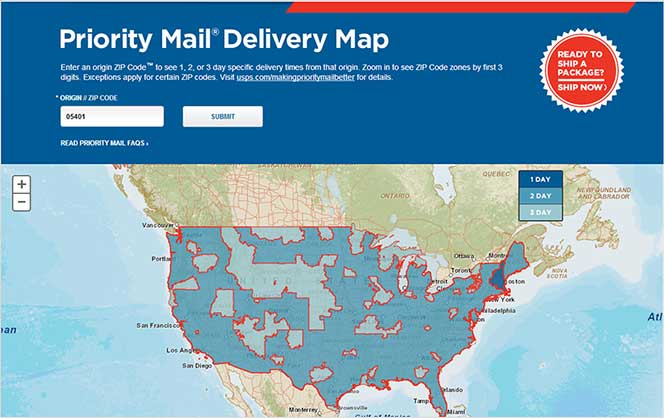
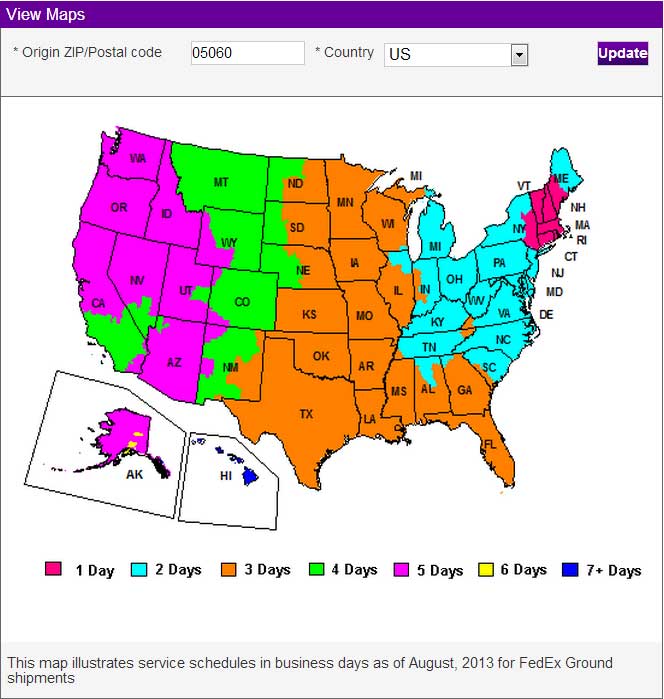
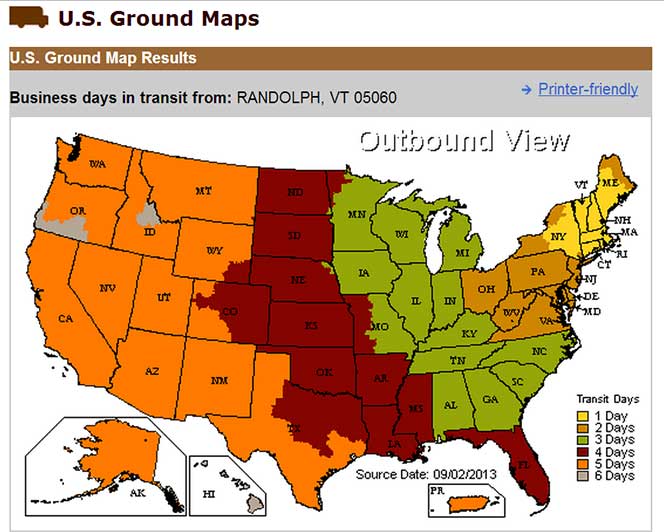
See respective ZONE maps below for SPECIFIC delivery time to your location:
Any order that does not qualify for free shipping, will by default include a discount of equal value to the free shipping offer.
The shipping offered is meant to provide the widest variety of shipping options at the lowest price: