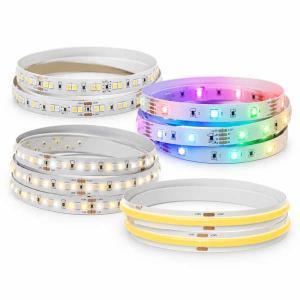








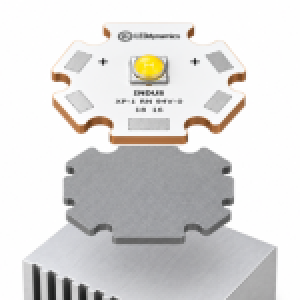
Continuous COB Output
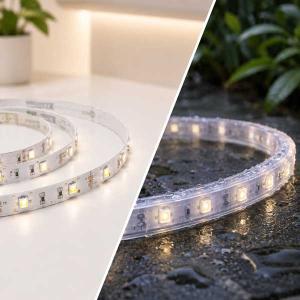
Tightly spaced LED die beneath a continuous phosphor surface reduce the visible points associated with traditional packaged LEDs. The practical result is a smoother line at closer viewing distances and in shallower profiles.



 ,
Operating Voltage ,
IP Rating ,
Color Temperature (CCT) ,
Color (nm) ,
Light Output (lm/ft) ,
LED Density (LEDs/M) ,
CRI ,
Power Consumption (W/ft) ,
Maximum Run Length (ft) ,
Cutting Interval (Inches) ,
Strip Width ,
Narrow your choices
,
Operating Voltage ,
IP Rating ,
Color Temperature (CCT) ,
Color (nm) ,
Light Output (lm/ft) ,
LED Density (LEDs/M) ,
CRI ,
Power Consumption (W/ft) ,
Maximum Run Length (ft) ,
Cutting Interval (Inches) ,
Strip Width ,
Narrow your choices
Compare fixed-white, tunable-white and single-color COB strips by documented output, CCT or wavelength, CRI, power, run length and cut interval—then complete the installation with compatible 24V power, control, channels and connections.
COB describes how the light source is constructed; it does not define brightness, color quality or electrical limits. Use the published specifications below to select the right strip and supporting system.
Tightly spaced LED die beneath a continuous phosphor surface reduce the visible points associated with traditional packaged LEDs. The practical result is a smoother line at closer viewing distances and in shallower profiles.
Compare lumens per foot, not LED count alone. Current white COB options deliver up to 427 lm/ft; tunable-white output varies with channel mix and operating conditions.
Choose a fixed Kelvin value for one white appearance, a tunable-white range for adjustable CCT, or a specified wavelength/color for monochromatic accent light. These require different wiring and controls.
CRI describes general color fidelity, R9 evaluates saturated red, and TM-30 Rf/Rg adds broader fidelity and gamut data. Current white products publish 90+ CRI; use documented R9 or TM-30 values only when provided.
Current products operate at 24V DC and use 4–5W/ft nominal ratings. Size power from the product's measured load data, include appropriate capacity headroom, and observe its maximum continuous run.
Current strips are 10mm wide and IP20 for indoor dry locations. Cut only at the marked points; current products use approximately 1.04- or 2.46-inch intervals depending on circuit design.
The value comes from the complete optical construction, not from a marketing label or LED-count comparison by itself.
The current Architectural Series COB range uses one 24V, 10mm, indoor platform while offering three different kinds of light and control.
For cabinetry, millwork, shelving, coves and displays that require one specified white appearance with straightforward dimming.
For spaces that need warm ambient light and cooler task light from the same continuous COB source.
For signage, displays, shelving and architectural accents that need a smooth, saturated single-color line.
Neither construction is automatically brighter or more efficient. Select the architecture that best supports the project's visual, environmental and electrical requirements.
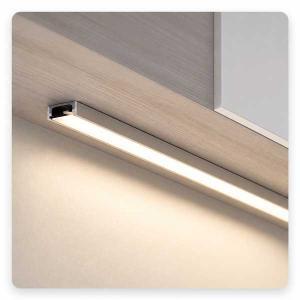
Best for visible lines of light, shallow channels, reflective stone or tile, display cases and refined millwork where pixelation is objectionable.
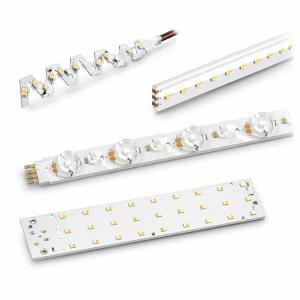
Shop COB strips →Best when the project needs a wider selection of voltages, IP ratings, specialty temperatures, side-emitting formats or other package-level options.
Explore all LED strips →Use lumens per foot and watts per foot for performance. Mock up the chosen strip, channel, diffuser and mounting distance when surface appearance is critical.
Explore channels & diffusers →A professional result depends on component compatibility and layout. Confirm voltage, load, control channels, wire size, feed points, strip width and environmental conditions before ordering.
Size capacity from the product's tested load for the planned length, including appropriate design headroom.
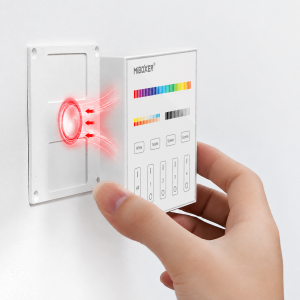
Use single-channel PWM control for fixed white or single color, and two-channel CCT control for tunable white.
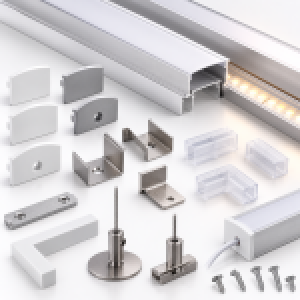
Match the 10mm PCB and select the profile for mounting, heat transfer, protection, glare control and finished appearance.
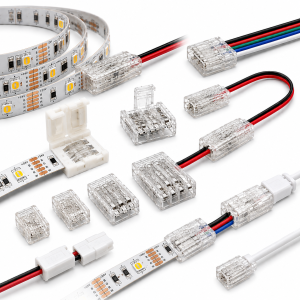
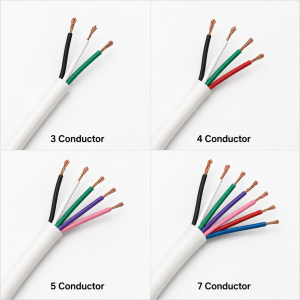
Match conductor count, polarity, wire gauge, connector width and planned feed locations to the selected COB strip.
Use these LEDSupply guides to understand the technology, select the strip and engineer a reliable installation.
COB means chip on board. Many small LED die are mounted closely together and covered by a continuous light-emitting phosphor layer. This blends their output before it leaves the strip, producing a smoother line than widely spaced packaged LEDs.
COB substantially reduces visible points and pixelation, but “dot-free” is an appearance result rather than an absolute condition. Output, dimming level, channel depth, diffuser, viewing distance, surface reflectivity and installation geometry can all affect what the eye sees.
Not always for visual blending, but a channel may still improve mounting, protection, heat transfer and the finished architectural detail, while a diffuser can reduce glare and protect the strip. Evaluate the complete assembly for the application.
Not inherently. COB and SMD describe construction, not guaranteed performance. Compare published lumens per foot for brightness and lumens per watt for efficacy, along with CRI, CCT, power, thermal conditions and optical losses.
Choose fixed white when one Kelvin value is required, tunable white when occupants must adjust between warm and cool white, or single color when the project needs a continuous red, green or blue accent. The control and wiring requirements differ for each.
Yes, but only at the marked copper cut points. Current products use approximately 1.04- or 2.46-inch intervals. Confirm the exact strip before laying out finished lengths; cutting elsewhere damages the circuit.
The current products on this category page are IP20 and intended for indoor dry locations. Do not use them where moisture, condensation or washdown is expected; select a product with the appropriate environmental rating instead.
Use the product's measured power-by-length data where available, then add the capacity headroom specified for the power supply and controller. Stay within the listed maximum run, verify wire gauge and voltage drop, and use additional feeds or parallel runs where required.




Orders received before 3PM EST will be safely packaged and quickly shipped the same business day. If your order is NOT shipped the same business day, LEDSupply will offer a 5% discount off your next order.
All orders SHIP FROM:
296 Beanville Road
Randolph, Vermont 05060
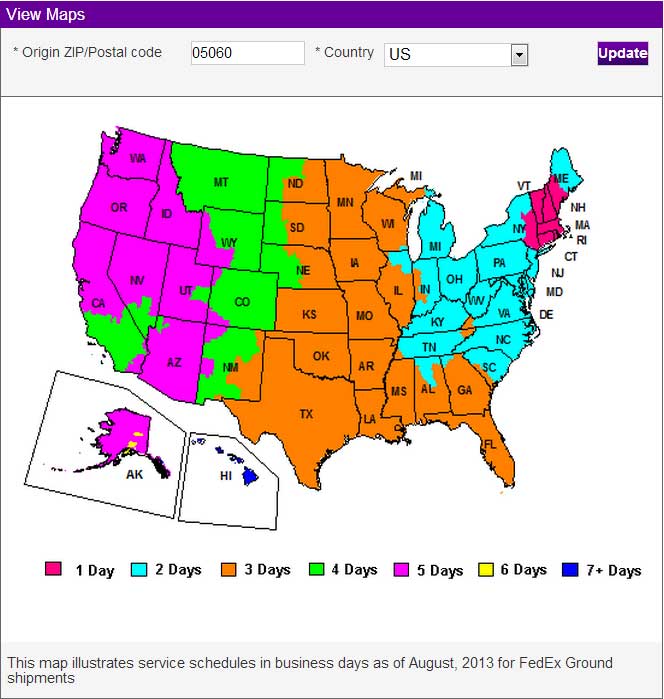
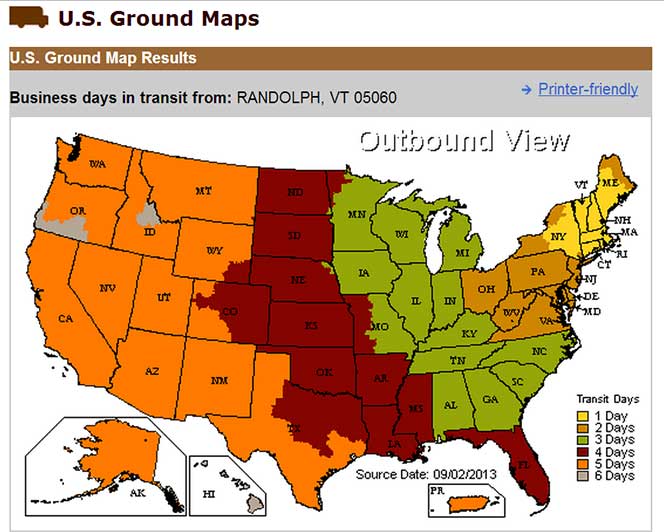
See respective ZONE maps below for SPECIFIC delivery time to your location:
Any order that does not qualify for free shipping, will by default include a discount of equal value to the free shipping offer.
The shipping offered is meant to provide the widest variety of shipping options at the lowest price: