







CCT Range & Endpoints
Choose 2200K–5000K for a deeper candlelight appearance or 2700K–6500K for a broader warm-to-daylight range. Confirm both endpoints; “tunable white” alone does not define them.



 ,
Operating Voltage ,
IP Rating ,
Color Temperature (CCT) ,
Light Output (lm/ft) ,
LED Density (LEDs/M) ,
CRI ,
Power Consumption (W/ft) ,
Maximum Run Length (ft) ,
Cutting Interval (Inches) ,
Strip Width ,
Narrow your choices
,
Operating Voltage ,
IP Rating ,
Color Temperature (CCT) ,
Light Output (lm/ft) ,
LED Density (LEDs/M) ,
CRI ,
Power Consumption (W/ft) ,
Maximum Run Length (ft) ,
Cutting Interval (Inches) ,
Strip Width ,
Narrow your choices
Compare documented CCT range, light output, CRI, LED density, power, IP rating, cut interval and control requirements—then specify the strip and compatible system components with confidence.
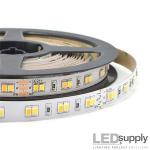
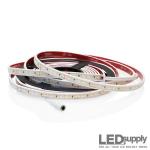
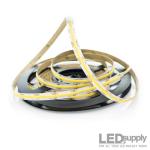
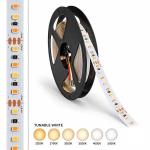
Tunable white uses separate warm-white and cool-white channels to produce an adjustable range of white light. Choose the endpoints, performance and controls as one coordinated system.
Choose 2200K–5000K for a deeper candlelight appearance or 2700K–6500K for a broader warm-to-daylight range. Confirm both endpoints; “tunable white” alone does not define them.
Compare tested lumens per foot at the CCT setting important to the project. Output can change as the controller varies the contribution of the warm and cool channels.
CRI describes general color fidelity, R9 evaluates saturated red, and TM-30 Rf/Rg adds broader fidelity and gamut information. For critical work, review data at relevant CCT settings.
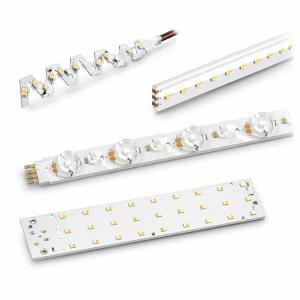
Ultra-high-density SMD provides closely spaced points of light. COB uses a continuous phosphor layer for a smoother, dot-free line—especially useful in shallow channels.
All current options are 24V DC. Size the power supply from total installed wattage plus appropriate capacity headroom, and observe maximum run limits to manage voltage drop.
Match the environmental and temperature rating to the installation, confirm the 10mm strip fits the channel, and use the listed 1- or 2-inch cut interval when planning finished lengths.
The controller can blend only within the strip’s specified endpoints. The descriptive names below help communicate appearance; Kelvin values remain the technical reference.
The current tunable white range covers premium color quality, dot-free COB output and demanding high-temperature installations.
For specification-driven interiors where deep warm light, color rendering and precise field sizing matter.
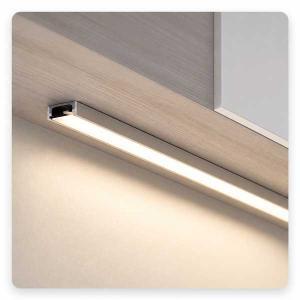
For visible lines of light, shallow profiles and finished architectural details that benefit from a continuous appearance.
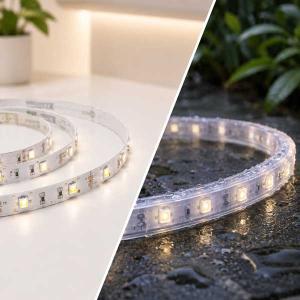
For high-temperature, high-moisture applications that require adjustable white light and a purpose-built protected construction.
Select the simplest architecture that delivers the required lighting effect. These three categories solve different control needs.
Best when the project needs one consistent Kelvin value with the simplest wiring and control.
Shop fixed-white strips →Best when users need to move between warm, neutral and cool white while maintaining a white-light-only system.
Shop this category →Best when the project requires saturated colors in addition to a dedicated white-light channel.
Shop RGBW strips →The strip, power supply, controller, mounting and connections must work together. Confirm voltage, channel capacity, wiring topology, dimensions and environmental requirements before ordering.
Size capacity from installed length and W/ft, including appropriate design headroom.
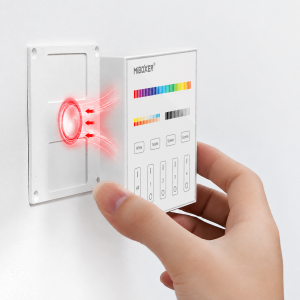
Use compatible two-channel CCT control and verify voltage, current capacity, polarity and protocol.
Match the 10mm tape width and plan mounting, heat transfer, protection and diffusion.
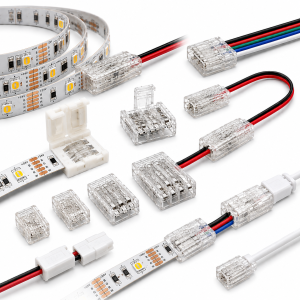
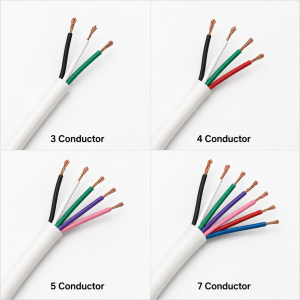
Confirm conductor count and topology, wire size, feed points, connectors and any required sealing.
Use these LEDSupply guides to understand adjustable CCT, select the strip and size the supporting system.
Tunable white strip contains warm-white and cool-white channels that a compatible controller blends to change correlated color temperature. It adjusts the appearance of white light within the strip’s specified Kelvin range and can also be dimmed when the controller supports both functions.
Choose 2200K–5000K when an extra-warm candlelight appearance is important. Choose 2700K–6500K when the project benefits from a higher daylight endpoint. Consider the room, finishes, adjacent light sources and the CCTs occupants will actually use.
Yes. Use a controller designed to manage the strip’s separate warm-white and cool-white channels. Match the controller to 24V DC, total load, channel configuration, polarity, wiring topology and the desired interface or control protocol.
No. Tunable white changes the appearance of white light between specified warm and cool endpoints. If the project also requires saturated colors, consider RGBW strip and its compatible multi-channel controller.
Not necessarily. Output depends on the warm/cool channel mix, controller behavior and product design. For specification work, review the product’s test conditions and performance at the CCT settings most important to the installation.
Yes, at the designated cut points only. Current products use 1- or 2-inch cutting intervals. Check the exact product before laying out finished lengths, and note that field cutting or adding connections can affect environmental protection.
No. IP ratings describe protection against solids and water, not operating temperature. Use a strip specifically rated for sauna temperatures and follow its installation limits; do not infer high-temperature suitability from IP68 alone.
Multiply the strip’s watts per foot by the total installed footage, then add the capacity headroom specified for the power supply and control system. Also check controller channel limits, wire size, feed locations and the strip’s maximum run length.




Orders received before 3PM EST will be safely packaged and quickly shipped the same business day. If your order is NOT shipped the same business day, LEDSupply will offer a 5% discount off your next order.
All orders SHIP FROM:
296 Beanville Road
Randolph, Vermont 05060
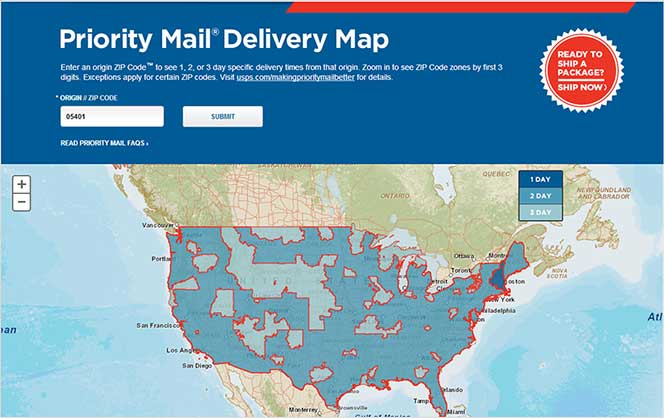
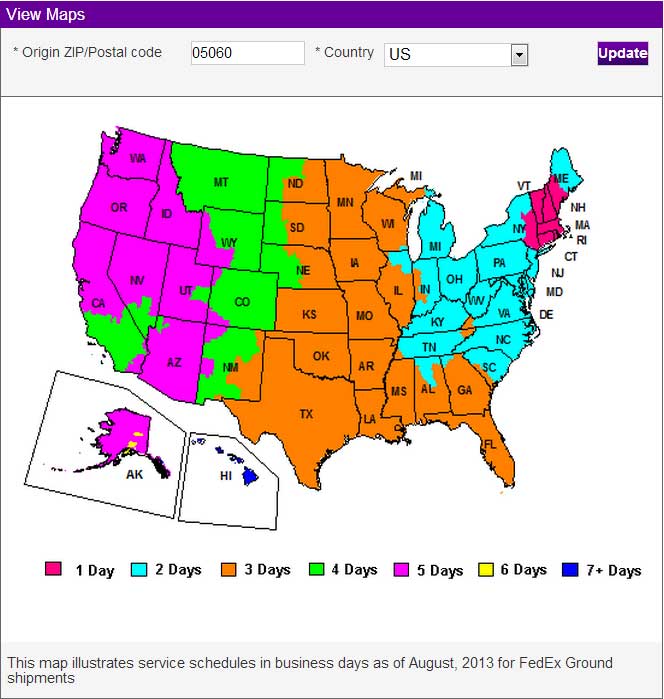
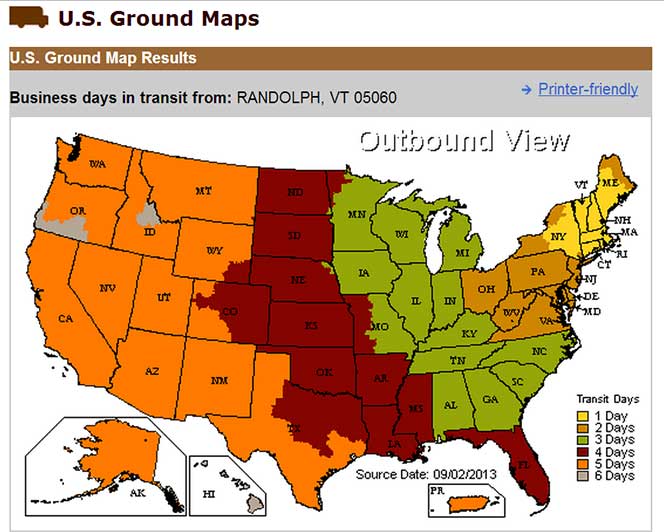
See respective ZONE maps below for SPECIFIC delivery time to your location:
Any order that does not qualify for free shipping, will by default include a discount of equal value to the free shipping offer.
The shipping offered is meant to provide the widest variety of shipping options at the lowest price: