







Color Temperature (CCT)
CCT defines whether the white light appears warm, neutral or cool. Match an existing source by Kelvin value—not by the descriptive name alone.



 ,
Operating Voltage ,
IP Rating ,
Color Temperature (CCT) ,
Light Output (lm/ft) ,
LED Density (LEDs/M) ,
CRI ,
CRI R9 ,
Power Consumption (W/ft) ,
Maximum Run Length (ft) ,
Cutting Interval (Inches) ,
Strip Width ,
Narrow your choices
,
Operating Voltage ,
IP Rating ,
Color Temperature (CCT) ,
Light Output (lm/ft) ,
LED Density (LEDs/M) ,
CRI ,
CRI R9 ,
Power Consumption (W/ft) ,
Maximum Run Length (ft) ,
Cutting Interval (Inches) ,
Strip Width ,
Narrow your choices
Compare fixed-white LED strips by color temperature, delivered output, color quality, voltage, IP rating and construction—from dependable project essentials to architectural-grade illumination.
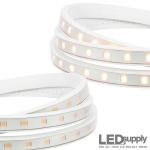
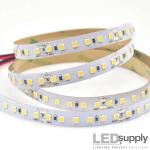
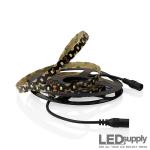
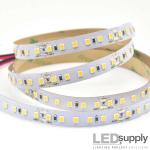
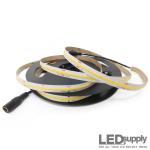
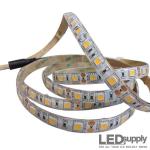
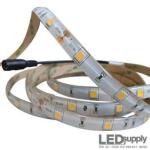
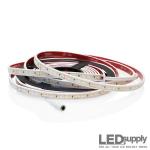

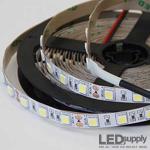
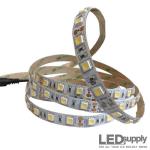
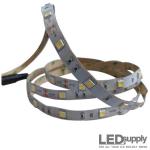
The right strip is the one that fits the lighting effect, electrical system, environment and physical installation. Compare the specifications below before choosing a product.
CCT defines whether the white light appears warm, neutral or cool. Match an existing source by Kelvin value—not by the descriptive name alone.
Lumens per foot is the most useful way to compare strip brightness. Lower-output strips suit accents; higher-output strips support under-cabinet, task and commercial lighting.
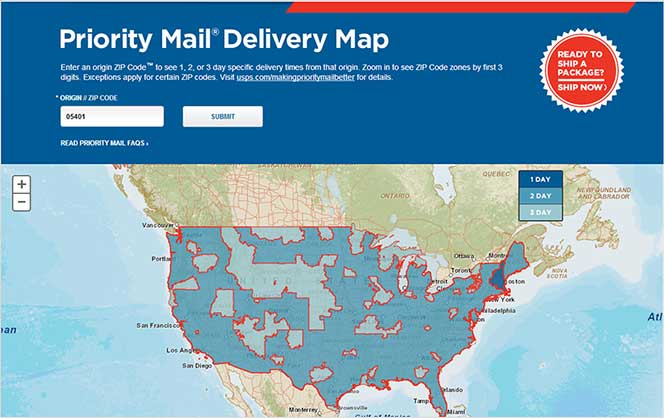
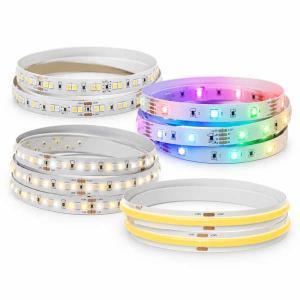
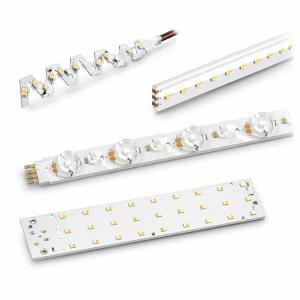
Higher LED density reduces visible spacing between LEDs. COB produces a continuous line of light, while bendable and wall-washer styles solve specialized layouts.
CRI describes general color fidelity, R9 evaluates saturated red, and TM-30 Rf/Rg adds broader fidelity and gamut information for demanding specifications.
Match the strip voltage to the power supply. Multiply watts per foot by total footage, add capacity headroom, and observe the rated maximum run length to manage voltage drop.
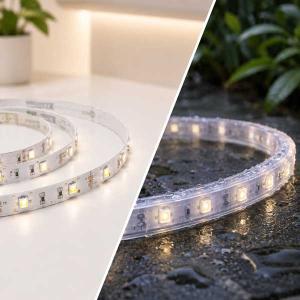
Select an IP rating for the actual exposure, confirm the strip fits the channel or space, and use the cut interval to plan finished lengths accurately.
The names are helpful visual categories; the Kelvin value is the technical specification to use when matching products.
Not every installation needs the same density, output or color quality. LEDSupply’s three series make the performance differences easier to understand.
A practical choice for accent, toe-kick, cove and other installations where dependable illumination and project cost are the priorities.
A strong general-purpose choice for under-cabinet lighting, work areas, displays and applications that need brighter, more uniform light.
Designed for visible, specification-driven and high-end installations where smooth output, color accuracy and refined appearance matter most.
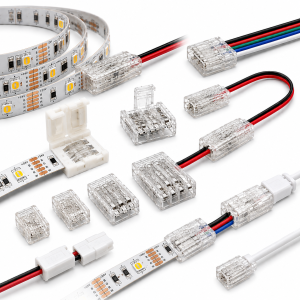
The strip is one component. Confirm that power, control, mounting and connections are compatible with the selected voltage, wattage, width and environment.
Match voltage and size capacity from the total W/ft and installed length.
Choose compatible PWM, 0–10V, TRIAC or other control architecture.
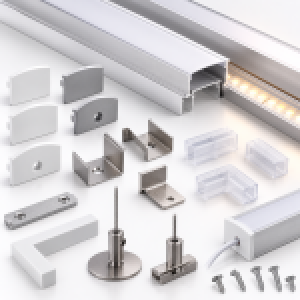
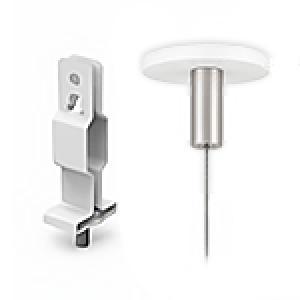
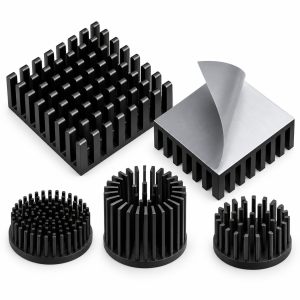
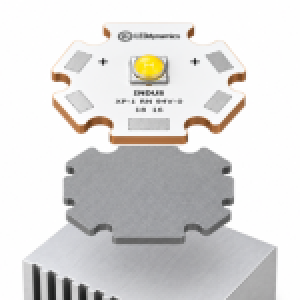
Improve mounting, protection, heat transfer and the finished appearance.
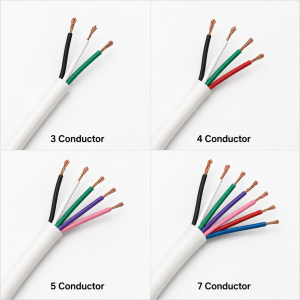
Plan conductor size, feed points, connectors, leads and environmental sealing.
Use these LEDSupply guides to select the strip, compare performance levels and plan the complete installation.
Choose by the desired appearance and the other light sources in the space. 2200K is candlelike, 2700K–3000K is warm, 3500K–4000K is neutral, and 5000K–6500K appears crisp and cool. Match existing lighting by Kelvin value whenever possible.
Accent lighting generally needs less output than task lighting. Consider the mounting location, distance from the illuminated surface, diffuser losses and ambient light. Compare products by lumens per foot rather than wattage alone.
Both can provide excellent light. The correct choice depends on the available power system, run length, cut interval and controls. A 24V strip will generally carry the same wattage with less current and may support longer runs, while some 12V strips offer shorter cutting intervals.
CRI is the familiar general color-rendering score. R9 specifically evaluates strong red rendering. TM-30 uses a broader set of color samples and reports fidelity as Rf and average gamut as Rg, providing more detail for specification-driven projects.
Standard SMD strip uses individually spaced LED packages. COB strip places many emitters beneath a continuous phosphor layer to create a smoother, dot-free line of light. A diffuser and mounting distance can also affect visible dotting.
Most can be cut only at designated cut points. Check the product’s cutting interval before planning exact lengths. Cutting, soldering or adding connectors may also change environmental protection and warranty coverage.
Requirements vary by product and installation. A compatible aluminum channel can improve mounting, protect the strip, support heat transfer and create a more finished appearance with a diffuser. Confirm the strip width and thermal requirements before selecting a channel.




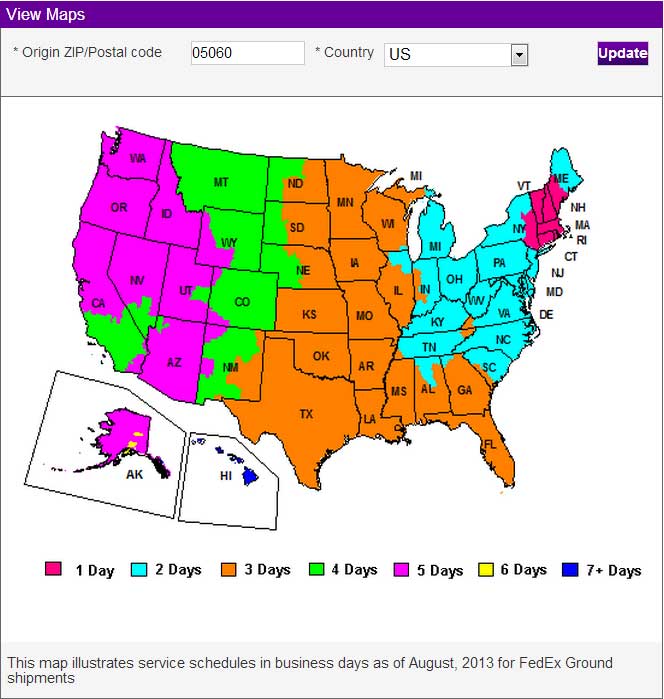
Orders received before 3PM EST will be safely packaged and quickly shipped the same business day. If your order is NOT shipped the same business day, LEDSupply will offer a 5% discount off your next order.
All orders SHIP FROM:
296 Beanville Road
Randolph, Vermont 05060
See respective ZONE maps below for SPECIFIC delivery time to your location:
Any order that does not qualify for free shipping, will by default include a discount of equal value to the free shipping offer.
The shipping offered is meant to provide the widest variety of shipping options at the lowest price: